




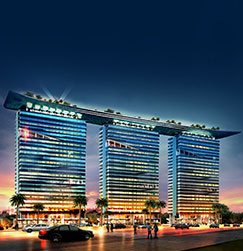


Greater Noida has transitioned from an emerging real estate corridor into a high-stakes commercial battleground. Glass-fronted developments, ambitious master plans, and aggressive launches dominate the skyline-but beneath this visual momentum lies a critical truth that seasoned investors understand well: commercial real estate success depends far more on the developer than on the brochure. In a market where capital is locked for the long term, reliability is not a preference; it is a prerequisite.
When evaluating commercial investments in Greater Noida West, projects such as Grandthum by Group 108 bring this conversation into sharper focus-not because of marketing noise, but because they highlight what reliability actually looks like in practice.
While connectivity, expressways, and upcoming infrastructure remain important, they no longer provide sufficient differentiation. Multiple projects today enjoy comparable access and visibility. What separates a resilient commercial asset from a stagnant one is the developer’s ability to translate location potential into long-term performance.
A reliable developer understands that commercial real estate is not transactional-it is operational. Offices must attract enterprises that stay. Retail must generate consistent footfall, not just opening-week buzz. This demands foresight, patience, and execution discipline-qualities that cannot be replicated overnight.
Reliability begins at the drawing board. Developers who rush planning to capitalise on market sentiment often compromise structural logic, zoning efficiency, or service integration. These shortcuts rarely surface during the sales phase-but they become painfully visible during operations.
At Grandthum, the emphasis is on methodical planning rather than impulsive scale. Layouts are designed to support sustained commercial activity, not just quick sellability. This includes rational floor plates, functional vertical movement, service corridors that do not disrupt customer zones, and adaptability for different business formats.
For investors, this planning discipline translates into reduced risk of functional obsolescence-an issue that silently erodes commercial value in poorly conceived developments.
In commercial real estate, construction quality is not a cosmetic attribute-it is a financial one. Structural robustness affects everything from maintenance costs to tenant retention. A reliable developer treats construction governance as a reputational obligation, not an internal cost-saving exercise.
Projects like Grandthum by Group 108 reflect a development mindset where execution integrity matters as much as speed. This approach minimises rework, delays, and post-handover complications. For investors, it means predictable delivery cycles and assets that age with dignity rather than decay prematurely.
In a market like Greater Noida West-where oversupply can quickly punish substandard builds-construction credibility becomes a silent but decisive competitive advantage.
Another hallmark of a reliable developer is restraint. Flashy façades may attract attention, but commercial success depends on operational intelligence. Retail zones need natural flow, offices need efficiency, and mixed-use environments require careful segregation without isolation.
Grandthum’s commercial planning reflects an understanding of how businesses actually function, not how they appear in renderings. This user-centric approach enhances tenant satisfaction, improves lease stability, and strengthens the asset’s long-term income profile.
For investors, this directly impacts yield sustainability-often more than headline pricing or initial discounts.
In commercial leasing markets, developer reputation directly influences tenant decisions. Established brands and enterprises prefer developments where maintenance standards, governance clarity, and long-term management are predictable.
Developments backed by Group 108 benefit from this reputational equity. A reliable developer reduces friction in leasing, supports better tenant quality, and lowers vacancy risk—all of which are critical in a competitive market like Greater Noida.
This reputational advantage is not theoretical; it translates into stronger rental confidence and better resale liquidity over time.
Many investors make the mistake of evaluating reliability only until possession. In reality, that is when the real test begins. Commercial assets require continuous oversight—facility management, tenant curation, upkeep, and operational consistency.
Reliable developers remain engaged long after handover. They understand that neglect erodes value far faster than market cycles. At Grandthum, the development intent extends beyond completion, focusing on sustaining a premium commercial environment rather than abandoning the asset to fragmented management.
For investors, this post-possession stewardship safeguards capital appreciation and prevents the asset from slipping into irrelevance as newer projects emerge.
In today’s RERA-regulated environment, financial reliability has become non-negotiable. Clean accounting, project-specific fund utilisation, and transparency in approvals signal organisational maturity.
A reliable developer does not fear scrutiny—they invite it. This financial clarity protects investors from stalled projects, legal entanglements, and unexpected capital calls. In commercial real estate, where investment horizons span years, financial discipline is as important as location or design.
The most insightful question an investor can ask is not “What will this cost me today?” but “How defensible will this asset be ten years from now?”
In Greater Noida’s fast-expanding commercial ecosystem, defensibility comes from reliability. Projects like Grandthum demonstrate that reliable development is not about grand promises—it is about consistent execution, thoughtful planning, operational continuity, and long-term accountability.
For investors seeking durable returns rather than speculative wins, choosing a reliable real estate developer is not just good judgment—it is the strategy itself.