
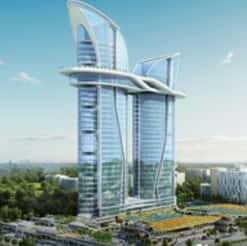





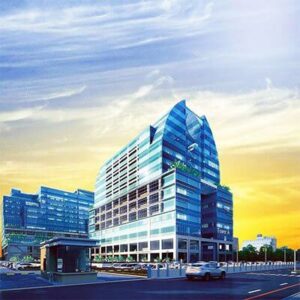

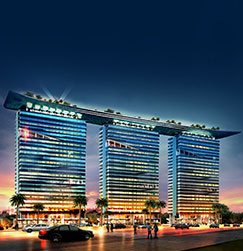


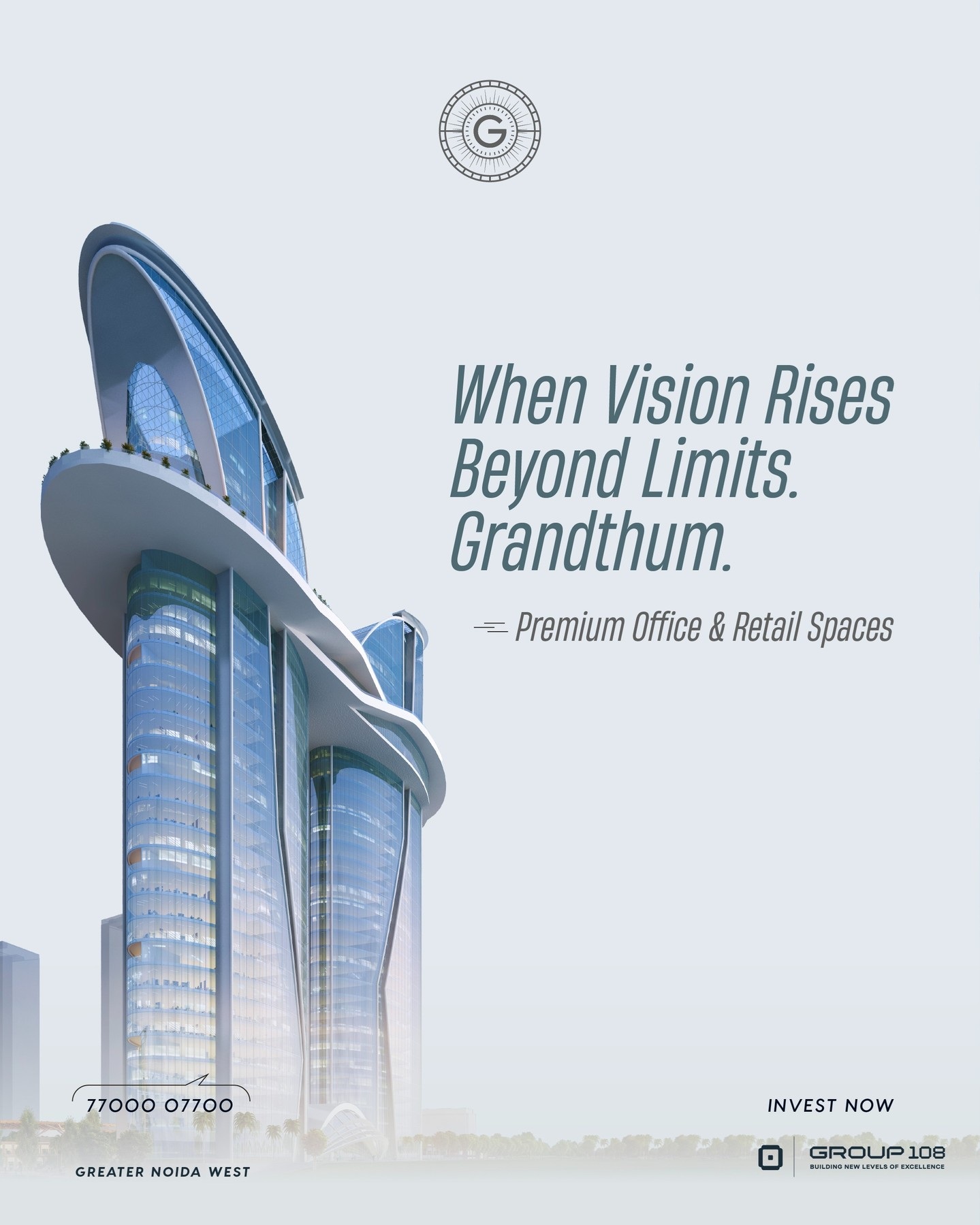
For Non-Resident Indians, the decision to invest in India is never purely financial. It is a blend of economic prudence, emotional connection, and long-term planning. While residential property has traditionally been the default option, it often falls short for NRIs seeking predictability, professional management, and meaningful returns. Commercial property, particularly developments like Grandthum, has emerged as the superior choice, offering not only financial rewards but also a stake in India’s evolving economic landscape.
One of the key advantages for NRIs is clarity of purpose. Residential investments often depend on subjective factors such as aesthetics, location preference, or potential resale value. Commercial property, by contrast, is designed to perform. Every square foot of Grandthum is conceived around real business activity—shops, offices, and service spaces are structured to attract consistent tenants who generate measurable income. For an investor abroad, this transforms ownership from a speculative endeavor into a predictable, income-producing asset.
Distance presents a unique challenge for NRIs. Managing property from afar is rarely straightforward, but commercial assets simplify this significantly. Tenants in commercial spaces operate under formal agreements with defined responsibilities, unlike residential tenants, who may require constant oversight. Grandthum’s professional management and structured leasing reduce the friction of absentee ownership, offering NRIs a hassle-free way to participate in the Indian market while living overseas. Centralized maintenance systems and standardized operational protocols further ensure that asset performance remains stable without requiring constant involvement from the owner.
Location is another crucial factor. Grandthum is strategically positioned in a growth corridor with robust infrastructure, high population density, and evolving commercial demand. Unlike scattered standalone properties, a well-located commercial hub attracts businesses organically, creating a self-sustaining ecosystem. Footfall draws tenants, tenants attract more visitors, and this cycle continuously reinforces the property’s value. For NRIs, such location-driven resilience is invaluable because it ensures long-term relevance regardless of market fluctuations or short-term economic cycles.
Currency dynamics further enhance the appeal. Rental income generated in rupees, when leveraged against earnings in stronger foreign currencies, can provide attractive returns. As India’s economy grows and urban consumption increases, well-positioned commercial assets like Grandthum are likely to see both rental escalation and appreciation, giving investors a dual advantage: steady income and long-term capital growth. This currency differential adds an additional layer of financial efficiency for overseas investors.
Transparency and regulatory comfort also matter. NRIs are particularly sensitive to legal clarity, title verification, and compliance. Grandthum addresses this with rigorous documentation, clear usage rights, and structured development processes. Such clarity minimizes risk and builds confidence for investors navigating property acquisition from abroad.
The scale of Grandthum is another differentiator. Large, integrated developments tend to create their own momentum. Once operational, these properties generate consistent footfall, attract reputable tenants, and maintain their market prominence over time. For NRIs, this reduces reliance on promotional efforts or market speculation—the asset’s value evolves naturally, underpinned by the project’s inherent strengths.
Beyond financial logic, there is an emotional dimension. Many NRIs seek a tangible connection to India’s growth story. Owning a stake in a landmark commercial development provides not just returns but a sense of pride and participation in urban transformation. Grandthum delivers both: an asset that works for investors economically and resonates culturally.
An added advantage for NRIs is portfolio balance. Commercial real estate offers diversification beyond traditional equities, mutual funds, or residential holdings, helping investors spread risk across asset classes. Grandthum provides this balance by combining stable rental income with long-term appreciation potential, making it a strategic hedge against market volatility. The project’s commercial orientation aligns with India’s expanding service economy, ensuring sustained relevance in a changing investment landscape. For NRIs planning generational wealth or future repatriation, such stability and performance consistency are essential.
Finally, liquidity and exit potential are practical considerations. Commercial properties in recognized hubs attract institutional buyers, investors, and businesses, making them easier to sell if the need arises. Grandthum’s strategic positioning enhances this liquidity, ensuring that ownership remains flexible while maintaining long-term performance.
In conclusion, NRIs invest differently because their circumstances demand clarity, reliability, and professional execution. Grandthum addresses all of these requirements: it is a commercial engine built to perform, a location anchored in growth, and a structure that enables remote investors to participate confidently. For the global Indian seeking a secure, high-performing asset, commercial property is no longer a secondary option—it is the logical, rewarding choice.