









Most people step into real estate through residential property because it feels familiar. You understand homes. You’ve lived in one, you’ve seen how people choose them, and it all seems predictable. But after a point, something starts to feel limiting. The returns plateau, tenants change more often than expected, and the effort begins to outweigh the outcome. That’s usually when the shift toward commercial real estate begins, not as a trend, but as a realization.
The fundamental difference lies in intent. Residential properties are chosen emotionally. People look for comfort, lifestyle, personal preferences. Commercial properties, on the other hand, are chosen with a purpose. Businesses don’t move into a space because it “feels nice”—they move in because it works. That shift from emotion to logic changes everything about how returns behave.
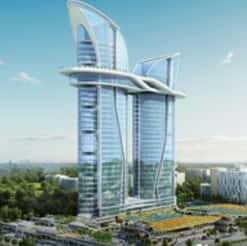
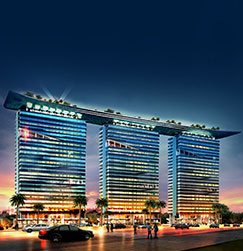
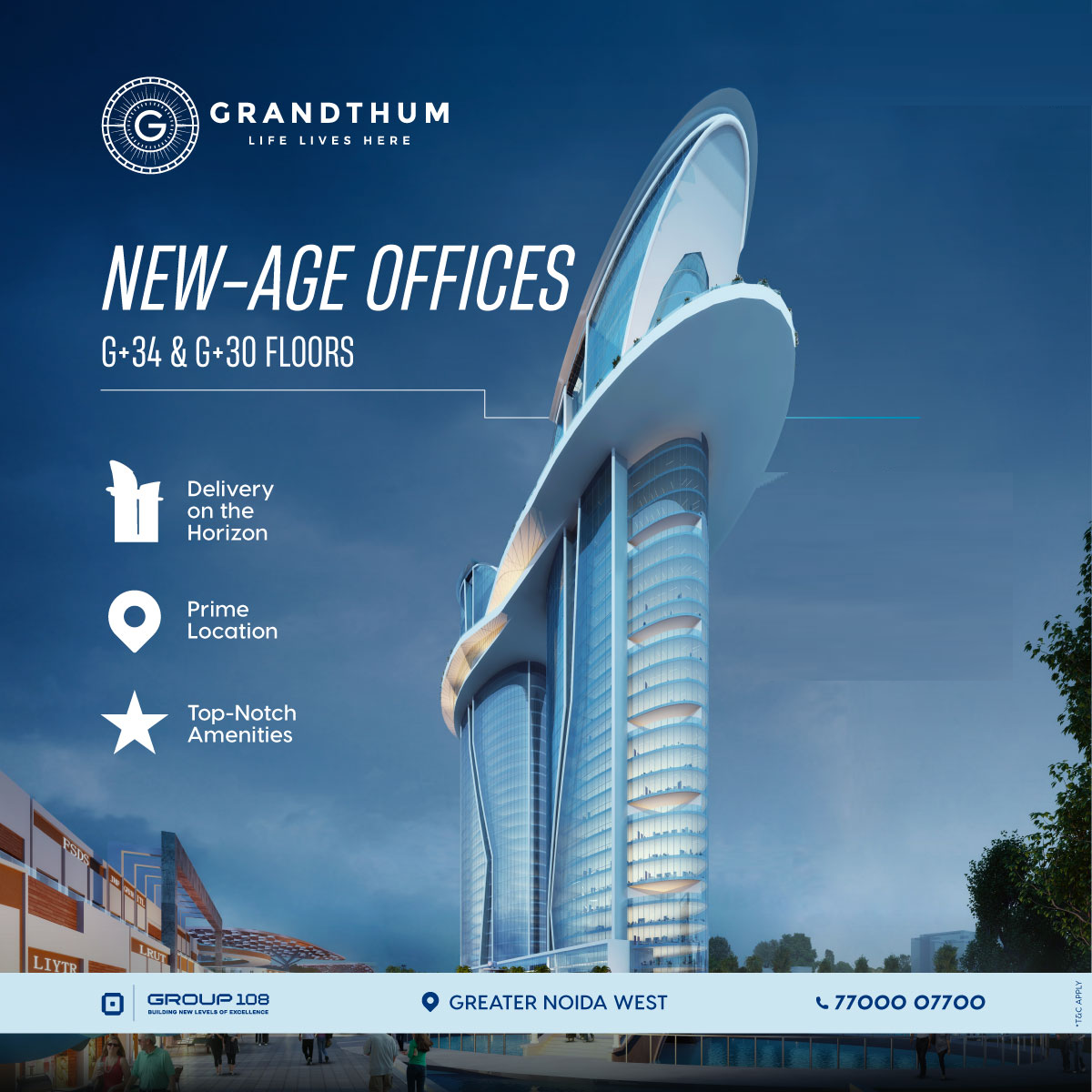
Rental yield is often the first noticeable difference. Residential investments tend to offer modest returns, sometimes just enough to justify holding the asset. Commercial spaces operate differently. Businesses are willing to pay for visibility, accessibility, and functionality. When a location supports their operations, rent becomes an operational cost rather than a burden. Developments like Grandthum naturally align with this mindset because they’re designed to support business activity at scale, not just occupancy.
Another advantage that becomes clearer over time is lease stability. Residential tenants move for all kinds of reasons, job changes, family needs, upgrades. Commercial tenants, however, are far less fluid. Relocating a business involves cost, effort, and risk. Once they find a space that supports their workflow, they tend to stay. That consistency translates directly into predictable income.
There’s also a different kind of ecosystem at play. Residential properties function independently. One unit, one tenant, one income stream. Commercial developments, especially integrated ones, create layered value. Offices bring in professionals, retail attracts footfall, and together they reinforce each other. In a project like Grandthum, this interdependence strengthens demand across the board, which indirectly protects your investment.
Scalability is another area where commercial real estate quietly outperforms. Expanding a residential portfolio often means managing multiple properties across different locations, each with its own set of challenges. Commercial investments allow you to grow within a single ecosystem. You’re not just adding assets, you’re strengthening your position within a functioning commercial environment.
Risk is often misunderstood in this conversation. Commercial real estate is perceived as riskier because the entry cost can be higher. But the nature of that risk is different. It’s tied to business demand rather than individual preferences. In a growing region like Greater Noida West, where commercial activity is steadily increasing, that demand becomes more predictable than people assume.
Another point worth considering is appreciation. Residential properties can reach saturation quickly, especially in densely developed areas. Commercial properties, however, tend to grow alongside economic activity. As more businesses enter a region, the value of well-located commercial spaces rises organically. You’re not just relying on market sentiment—you’re benefiting from actual usage.
What makes Grandthum particularly relevant in this context is its positioning within a high-growth corridor. It doesn’t depend on future speculation alone; it aligns with an already expanding catchment. That reduces uncertainty and gives investors a clearer sense of direction.
There’s also a subtle psychological shift that happens when you move into commercial investing. You stop thinking in terms of “owning property” and start thinking in terms of “generating returns.” Decisions become more structured, more analytical, and less reactive.
Ultimately, the conversation isn’t about choosing one over the other. Residential real estate has its place, especially for stability and personal use. But when the goal is stronger returns, consistent income, and long-term growth, commercial real estate begins to stand out, not dramatically, but steadily.
And that’s the key. It doesn’t promise overnight gains. It delivers something more reliable, performance that builds over time, without constant intervention.
And somewhere around that point, the decision starts feeling less like a comparison and more like clarity. You’re no longer weighing “residential vs commercial” in theory, you’re looking at what actually holds up in real situations. That’s where spaces like Grandthum begin to feel more convincing without trying too hard. It’s not about big claims; it’s about how naturally everything fits together once you picture it in use. And when an investment feels that grounded, you don’t keep questioning it, you just understand why it works.