




Some cities expand quietly. Others erupt into relevance with astonishing speed. Greater Noida West belongs to the second category. What was once viewed primarily as a residential extension has now transformed into one of NCR’s most commercially watched growth corridors. Investors, entrepreneurs, retailers, and businesses are no longer treating the region as a future possibility. They are treating it as an active commercial opportunity unfolding in real time.
The demand for commercial property in Greater Noida West is not being driven by temporary market excitement. It is being fuelled by something much stronger, urban momentum. The region has developed an ecosystem where residential density, infrastructure expansion, lifestyle migration, and business activity are strengthening one another simultaneously.
Commercial real estate flourishes wherever human movement becomes consistent. Greater Noida West has reached that stage. Thousands of families now inhabit organised residential communities across the region, creating continuous demand for retail, dining, healthcare, office spaces, entertainment, and service infrastructure. Businesses naturally move toward population concentration because consumption follows convenience.
One of the biggest reasons behind the area’s commercial rise is behavioural evolution. People no longer want disconnected urban experiences. They do not want to travel across multiple districts for work, shopping, leisure, and social interaction separately. Modern consumers prefer integrated environments where professional and lifestyle activities coexist naturally. Commercial developments in Greater Noida West are increasingly responding to that expectation.
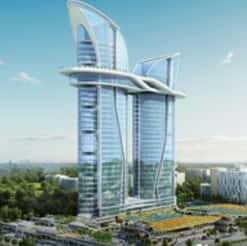
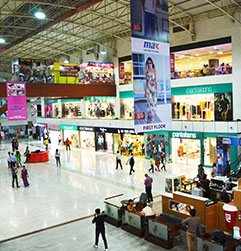
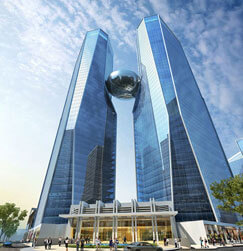
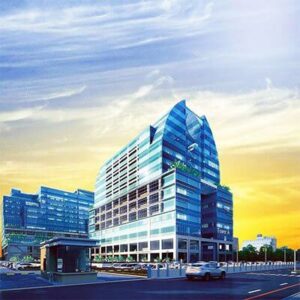
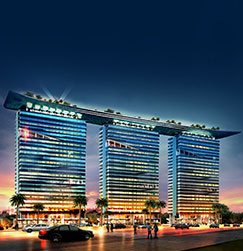
Among these emerging business destinations, Grandthum has established a particularly distinctive presence. Instead of operating like a traditional commercial project filled with repetitive office floors and isolated retail pockets, it creates an environment that feels immersive and multidimensional. Offices, entertainment zones, hospitality experiences, retail activity, and leisure infrastructure merge into one cohesive urban ecosystem.
That layered environment matters because commercial behaviour has changed dramatically in recent years. Earlier, consumers visited commercial spaces for functional reasons alone. Today, they seek engagement. They stay longer in destinations that feel experiential. Businesses also prefer locations capable of generating emotional recall rather than simple visibility.
Grandthum understands this contemporary commercial psychology exceptionally well. The project feels alive. Movement inside the development appears organic rather than forced. Visitors explore instead of merely passing through. That behavioural retention directly strengthens commercial performance.
Affordability combined with appreciation potential has also accelerated demand across Greater Noida West. Established commercial zones across NCR have become financially restrictive for many investors and growing businesses. Greater Noida West offers comparatively accessible entry points while still carrying significant long-term growth possibilities. Investors recognise that acquiring assets during a region’s expansion phase often produces stronger returns than entering fully saturated markets later.
Connectivity has further amplified commercial confidence. The region benefits from improving road infrastructure, expressway access, and growing integration with surrounding NCR districts. Businesses prioritise locations where employees, consumers, and logistics movement remain smooth and predictable. Accessibility is no longer a secondary feature in commercial real estate. It has become one of its strongest currencies.
Another important factor shaping demand is demographic energy. Greater Noida West possesses a comparatively younger and aspirational population. Young professionals, entrepreneurs, digitally influenced consumers, and upwardly mobile families collectively create a commercially active environment. Their spending behaviour supports cafés, wellness centres, branded retail, coworking environments, entertainment spaces, and modern dining culture.
This demographic shift has encouraged developers to rethink how commercial projects should function. Purely transactional spaces no longer dominate investor interest. Integrated business environments capable of supporting lifestyle experiences now attract stronger attention.
Grandthum reflects that transition perfectly. The project carries a contemporary architectural identity that feels ambitious without becoming excessive. It balances functionality with atmosphere. Businesses operating inside such environments often benefit from stronger perception value because consumers associate the space itself with professionalism and modernity.
Another reason commercial property demand continues rising in Greater Noida West is economic self-sufficiency. Earlier, many residential regions depended heavily on neighbouring districts for employment, leisure, and business activity. That dependency is gradually declining. Greater Noida West is developing its own commercial gravity. As more businesses establish themselves locally, supporting industries and services naturally follow.
Momentum strengthens momentum. New commercial activity increases visitor frequency. Higher visitor frequency attracts larger brands. Larger brands increase regional credibility. That cycle continuously expands the commercial ecosystem.
Investors today are increasingly aware that future-ready business districts are not built overnight. They evolve through infrastructure, population growth, lifestyle adaptation, and visionary developments capable of anchoring commercial attention. Greater Noida West is experiencing precisely that transformation.
For individuals seeking long-term commercial potential instead of short-lived speculation, the region presents extraordinary opportunity. And within this evolving landscape, Grandthum stands as a striking example of how modern commercial environments are being redesigned for a generation that values experience, accessibility, and urban energy equally.